
Does Pet Aquamation Produce Ashes Like Flame Cremation? Here’s How It Works
Admin / 03 – August – 2026 – Does Pet Aquamation Produce Ashes Like Flame Cremation? Here’s How It Works
Does Pet Aquamation Produce Ashes Like Flame Cremation? Here’s the Explanation
When pet owners first hear about Pet Aquamation, one of the most common questions is:
“If aquamation does not use fire, will I still receive my pet’s ashes?”
It is a very reasonable question.
For many years, people have been more familiar with conventional flame cremation. After the cremation process is completed, families usually receive what are commonly called ashes or cremated remains.
But what happens with aquamation?
If a pet’s body is processed using water instead of fire, where do the “ashes” come from?
The short answer is:
Yes. Private Pet Aquamation can produce fine memorial remains that can be returned to the family in a similar way to ashes from flame cremation. However, technically, these remains are not ashes created by burning. They primarily consist of bone minerals that remain after aquamation, which are then dried and processed into a fine material.
Understanding this difference is important, especially for pet owners considering pet aquamation, pet bio-cremation, or pet cremation services in Jakarta and Greater Jakarta.
With more than 15 years of experience in the pet industry, we believe every family deserves to understand exactly what happens to their beloved companion during each type of pet aftercare.
Let us explain it simply.
What Is Pet Aquamation?
Pet Aquamation is a pet aftercare method that uses a process known as alkaline hydrolysis.
The process uses a controlled combination of:
- Water
- Alkaline solution
- Temperature
- Circulation or agitation
- Time
to accelerate the natural breakdown of organic tissue.
Unlike conventional flame cremation, which relies on combustion at extremely high temperatures, aquamation is a water-based process.
During alkaline hydrolysis, organic tissues are broken down into simpler components while the mineral portion of the bones remains.
Afterward, these bone minerals are carefully collected, dried, and processed into what may be referred to as hydrolyzed remains, processed bone minerals, or aquamation ashes.
Because aquamation does not involve combustion, the word “ashes” is primarily a familiar term used by families rather than a completely precise scientific description.
So, Does Pet Aquamation Produce Ashes?
Yes—but They Are Not Ashes Created by Burning
This is the most important point to understand.
After pet aquamation is completed, the material remaining is not ash created because the pet’s body was burned.
What primarily remains is the pet’s bone minerals.
These bone minerals are then:
- Collected after the aquamation process.
- Carefully dried.
- Prepared for final processing.
- Reduced into a fine consistency using appropriate equipment.
- Placed inside a memorial urn or container.
- Returned to the family when a Private Aquamation service with ashes return has been selected.
Because the final material resembles cremated remains in appearance and function, people commonly refer to it as:
pet ashes, aquamation ashes, or water cremation ashes.
More technically accurate terms include processed bone minerals or hydrolyzed remains.
Where Do Aquamation “Ashes” Come From?
To understand this, it helps to look at what happens to a pet’s body during aquamation.
The body consists of many different components, including:
- Water
- Protein
- Fat
- Soft tissue
- Organs
- Collagen
- Bones and minerals
During aquamation, organic components undergo hydrolysis.
Once the process is complete, the soft tissues no longer remain in their original bodily form.
However, the mineral components of the bones remain solid.
These minerals are then collected.
After drying, the remaining bone material is relatively fragile and may initially appear as fragments.
The fragments are then processed into a finer consistency.
Therefore, aquamation “ashes” actually come from your pet’s remaining bone minerals—not from a body that has been burned.
What Is the Difference Between Aquamation Ashes and Flame Cremation Ashes?
Although both can eventually be returned to families inside an urn, the processes that create them are different.
Remains from Flame Cremation
During conventional cremation, the body is exposed to very high temperatures.
Organic tissues are consumed through combustion, while mineralized bone fragments remain after the process.
These bone fragments are then processed into what families commonly call cremated remains or ashes.
This means that even conventional cremation ashes are not simply ash like the material produced when paper or wood is burned.
Much of what families receive consists primarily of processed bone minerals.
Remains from Pet Aquamation
During aquamation, the body is not burned.
Instead, the organic tissues are broken down through alkaline hydrolysis.
The bone minerals remain and are subsequently:
dried → collected → processed → reduced to a fine texture → placed into an urn.
Because they have not gone through flame combustion, aquamation remains may have characteristics that differ from those produced through flame cremation.
Pet Aquamation vs Flame Cremation: Comparing the Final Remains
Aspect | Pet Aquamation | Flame Cremation |
Main process | Water + alkali + controlled temperature + circulation | Fire + very high temperature |
Combustion involved | No | Yes |
Solid material remaining | Bone minerals | Bone/mineral fragments |
Drying required | Yes | Not in the same way |
Final processing required | Yes | Yes |
Can be returned in an urn | Yes, with Private Aquamation | Yes, with private cremation |
Commonly called “ashes” | Yes | Yes |
Created directly by burning | No | Produced following flame cremation |
Typical appearance | Often lighter | Often white to grayish; varies |
Both methods can ultimately provide families with memorial remains that can be placed in an urn.
The primary difference is how the body is processed before the remaining bone minerals are obtained.
Are Pet Aquamation Ashes White?
One characteristic often associated with aquamation remains is their relatively light appearance.
Bone minerals remaining after alkaline hydrolysis generally tend to look lighter because they have not been exposed to the same combustion process as flame cremation.
After drying and processing, the final material may appear:
- White
- Ivory
- Pale cream
- Bone white
However, the exact appearance may vary depending on factors such as:
- Bone condition
- Age of the pet
- Body size
- Species
- Aquamation system
- Drying procedure
- Final processing method
For this reason, the color will not necessarily be identical for every pet.
What Is the Texture of Pet Aquamation Ashes?
After the remaining bone minerals have been dried and processed, they can usually be reduced to a consistency suitable for placement inside a memorial urn.
However, this does not necessarily mean the material will have the texture of very fine powder.
Depending on the processing method, the final remains may consist of:
- Fine mineral powder
- Very small mineral granules
- A combination of fine powder and small particles
This is normal.
Remember that the material originates from the mineral structure of the bones rather than ordinary combustion ash.
Does Aquamation Produce the Same Amount of Ashes as Flame Cremation?
Not necessarily.
The amount of memorial remains produced can be influenced by several factors, including:
- Your pet’s weight
- Bone size
- Species
- Breed
- Age
- Bone density
- Health condition
- Processing system
- Aftercare method
Therefore, two pets with a similar body weight may not necessarily produce exactly the same amount of remains.
The quantity of ashes should also not be used as an indicator of the quality of the aquamation process.
Bone mass and body weight are not the same thing.
Do the Aquamation Ashes Really Belong to My Pet?
This depends on the type of service selected and the identification procedures used by the pet aftercare provider.
If your family wants the remains returned, choose a Private Aquamation service with a clear identification and tracking system.
Before selecting a provider, consider asking:
“How is my pet’s identity maintained throughout the process?”
A professional provider should have an identification procedure from the moment your pet is received until their remains are returned.
“Can you confirm that the ashes returned belong to my pet?”
If the service provides individual ashes return, the provider should be able to explain how identification and separation are maintained.
“Is the process Private or Communal?”
This question is extremely important.
Do not assume that every aquamation package automatically includes the return of ashes.
Private Aquamation and Communal Aquamation Have Different Outcomes for Families
Private Aquamation
With Private Aquamation, the aftercare system is designed so that your pet’s remaining bone minerals can be individually identified and returned to your family.
After processing, the remains may be used to:
- Keep inside a memorial urn
- Create memorial jewelry
- Place inside a memorial frame
- Preserve as a keepsake
- Create a memorial garden
- Display alongside a favorite photograph or collar
Private Aquamation is generally chosen by families who would like to bring a physical memorial of their beloved companion home.
Communal Aquamation
With Communal Aquamation, several pets may undergo aquamation within a communal system according to the facility’s procedures.
Because the remaining bone minerals are not intended to be separated and returned individually:
Families generally do not receive individual ashes back.
Communal Aquamation may be suitable for families who want respectful pet aftercare but do not need ashes returned as a memorial.
Can Aquamation Ashes Be Kept in an Urn?
Yes.
Processed bone minerals from Private Aquamation can be placed inside many types of memorial urns.
Examples include:
- Wooden urns
- Ceramic urns
- Stone urns
- Metal urns
- Biodegradable urns
- Mini keepsake urns
- Custom pet urns
- Memorial boxes
Families can choose a design that best reflects their pet’s personality and the memories they shared together.
Can Aquamation Ashes Be Used for Memorial Jewelry?
If your Private Aquamation service returns the remains, a small portion may be used in certain memorial keepsakes, depending on the product.
Examples include:
- Memorial pendants
- Ashes necklaces
- Resin keepsakes
- Memorial bracelets
- Memorial glass pieces
- Small keepsake vials
Families may prefer to keep most of the remains safely inside an urn and use only a small amount for memorial jewelry or other keepsakes.
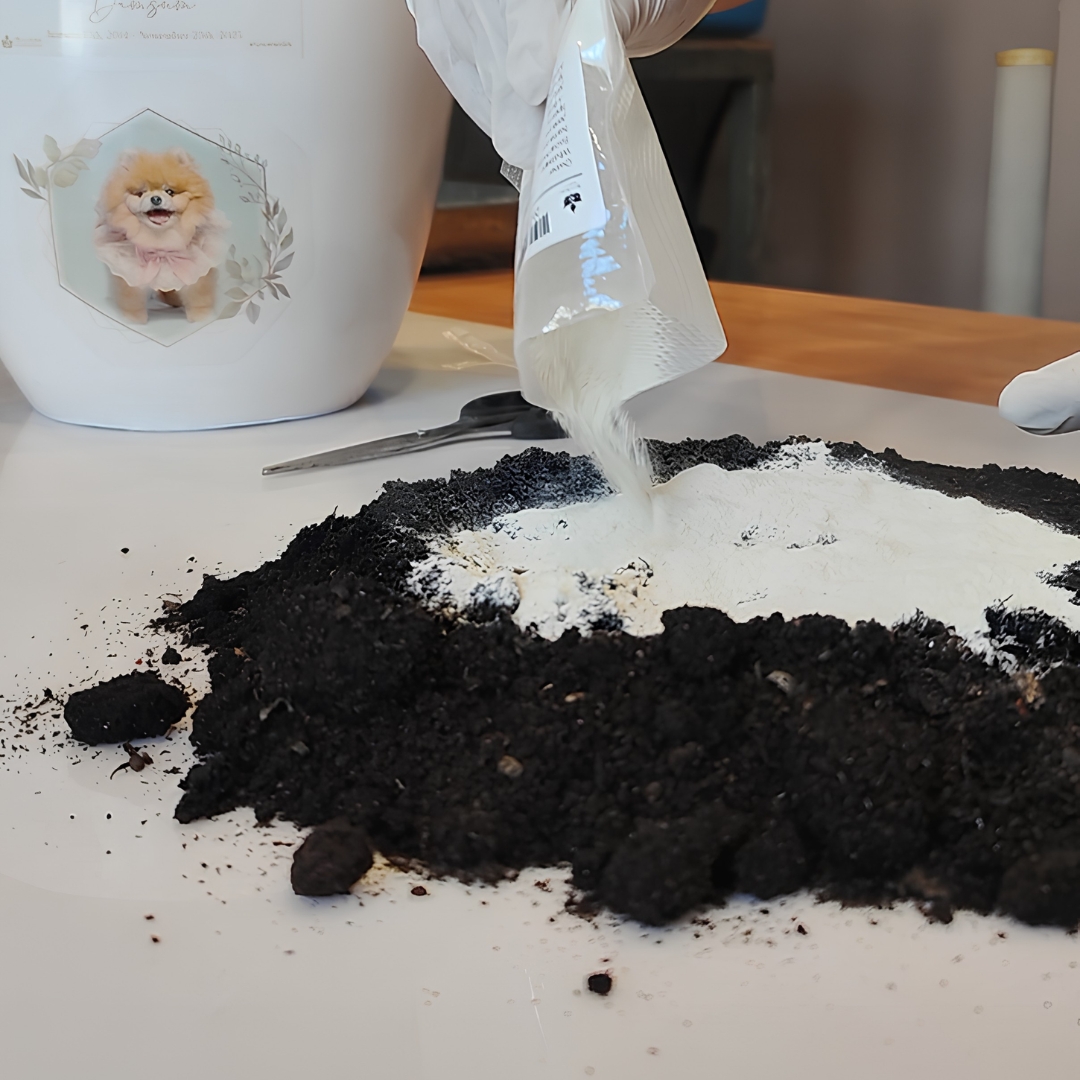
Can Aquamation Ashes Be Planted?
Some families choose to create a memorial garden for their beloved pet.
However, it is important not to assume that processed bone minerals can simply be added directly to any plant or soil.
Bone minerals have a different composition from ordinary plant fertilizer.
If you would like to incorporate your pet’s remains into a memorial tree or garden, consider using an appropriate planting medium or a biodegradable memorial system specifically designed for this purpose.
What Happens to the Liquid After Aquamation?
This is another common question from pet owners.
During alkaline hydrolysis, the organic components of the body do not turn into ashes.
Instead, they are broken down into simpler components within the process solution.
The solid bone minerals remain separate and are collected for drying and processing.
The resulting liquid must then be managed according to the facility’s treatment procedures, operating standards, and applicable environmental requirements.
A professional aquamation provider should be able to explain how its process and wastewater management system operate.
Why Is Aquamation Called “Water Cremation” If It Does Not Use Fire?
The term water cremation is commonly used because, from a pet owner’s perspective, the purpose is similar to conventional cremation:
A beloved pet undergoes an aftercare process, and the family may receive processed memorial remains afterward.
However, the underlying technology is very different.
Aquamation may also be referred to as:
- Alkaline hydrolysis
- Water cremation
- Flameless cremation
- Bio-cremation
- Pet aquamation
The word “cremation” helps families understand the purpose of the service, even though aquamation itself does not depend on flame combustion.
Is Pet Aquamation Gentler Than Flame Cremation?
Many families consider aquamation because the process does not use fire as its primary method.
Instead of combustion, the process relies on water, an alkaline solution, temperature, circulation, and time to accelerate the breakdown of organic tissue.
For some pet owners, this concept feels closer to a natural return and aligns better with how they would like to imagine their pet’s final journey.
The choice is deeply personal.
Some families prefer flame cremation.
Others choose burial.
And others feel that aquamation best reflects their values.
There is no single option that is right for every family.
Why Is Transparency Important in Pet Aquamation?
Pet aquamation is not simply about technology.
It is a service that cares for a deeply loved member of the family after death.
A professional provider should therefore be able to explain:
- How your pet is received
- How identification is maintained
- How your pet is stored before aquamation
- Which type of aquamation service is used
- Whether the service is private or communal
- How bone minerals are collected
- How the drying process works
- How the final remains are processed
- How ashes are returned
- What documentation is provided
Families deserve clear information before making a final decision.
Pet Aquamation in Jakarta and Greater Jakarta
As awareness of alternative pet aftercare options grows, more pet owners are searching for services such as:
- Pet aquamation Jakarta
- Pet bio-cremation Jakarta
- Dog cremation Jakarta
- Cat cremation Jakarta
- Pet water cremation Jakarta
- Pet funeral Jakarta
- Pet aftercare Greater Jakarta
- Pet aquamation Tangerang
- Pet funeral Bekasi
- Pet cremation Depok
- Pet funeral Bogor
If you live in Jakarta, Tangerang, South Tangerang, Bogor, Depok, Bekasi, or elsewhere in Greater Jakarta (Jabodetabek), do not compare pet aftercare providers based on price alone.
Make sure the provider can transparently explain:
What happens to your beloved pet during the process and what exactly your family will receive afterward.
Do Not Be Afraid to Ask About Your Pet’s “Ashes”
Some families feel uncomfortable asking detailed questions about what happens to their pet’s body after death.
But questions such as these are completely reasonable:
Will I really receive my pet’s ashes?
Where do aquamation ashes come from?
Why are aquamation remains lighter in color?
Why is the amount different from what I expected?
Is my pet burned during aquamation?
What happens to the bones?
A professional pet aftercare provider should not avoid these questions.
Education and transparency are essential parts of building trust.
So, Does Pet Aquamation Produce Ashes Like Flame Cremation?
The answer is:
Yes—in the Form of Memorial Remains, but the Process Is Different
Both Private Aquamation and private flame cremation can produce processed remains that may be returned to the family inside an urn.
However, the way those remains are produced differs.
Flame cremation:
Pet’s body → high-temperature combustion → bone mineral fragments → processing → cremated remains.
Pet Aquamation:
Pet’s body → water-based alkaline hydrolysis → remaining bone minerals → drying → processing → aquamation remains.
Therefore, when you receive what are commonly called “aquamation ashes,” you are not holding your pet’s body after it has been turned into ash through burning.
You are receiving their remaining bone minerals after aquamation, carefully dried and processed into a fine memorial material that can be returned to your family.
For many families, the most important thing is not the technical terminology.
It is knowing that after their pet’s final journey is complete, they can still bring home a small physical memorial of the companion who shared so much of their life.
A Small Memorial for a Very Big Love
An urn may look small.
The remains inside it may occupy only a small amount of space.
But their meaning can never be measured by weight or volume.
They carry memories of footsteps that once filled the house.
A favorite sleeping place that now feels empty.
A collar that will no longer be worn.
A familiar sound that once greeted us every time we came home.
And years of life that were shared together.
Pet Aquamation is simply one way to care for a beloved pet during their final journey.
But for families who choose to bring the remains home, those small bone minerals can become a quiet reminder that:
Their physical journey may have ended, but the love and memories they left behind continue to stay with us.